September 21st, 2011 • ‘This crisis is no natural disaster, but
can be
blamed on political failures.’ So said SP leader Emile Roemer during the debate on the government's programme for the
coming year. In the Netherlands, governments set out their plans and their budget in a speech delivered by the Queen each September, and a few days later Parliament has the opportunity to respond in the
'General Considerations', a wide-ranging debate. » Read
extracts from Emile Roemer's contribution to that debate.

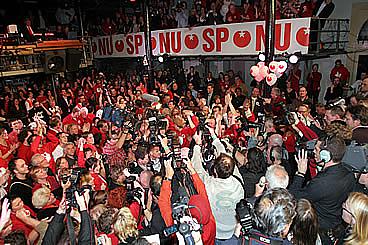
The Dutch Socialist Party (SP) works inside and outside parliament to achieve its goal: a society in which human dignity, equality and solidarity take precedence.
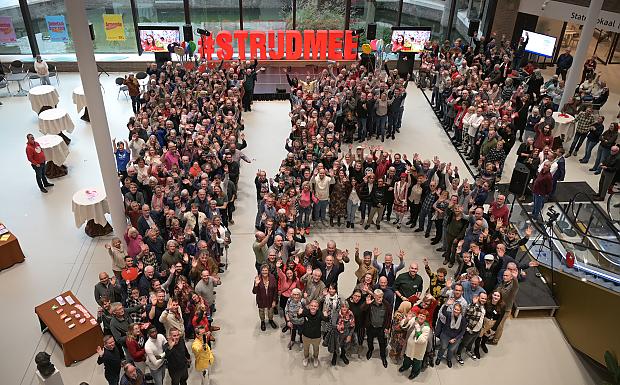
In terms of membership the SP, with more then 46,000 members, is the third biggest party in the Netherlands. Only the Christian Democrats (CDA) and Labour Party (PvdA) are bigger.
Members of the SP are factory workers and students, nurses and maintenance engineers, accountants and boat-builders, school students and pensioners. Every member is in a branch and has the right to speak and participate in decision-making at branch meetings. Each branch chooses its own executive and nominates candidates for elected office. On this basis the SP’s national organs – the Party Executive, the Party Council and the Congress – are also democratically elected.
We have fifteen Members in the 150-seat ‘Tweede Kamer’ (corresponding to the House of Commons or House of Representatives), eight in the Eerste Kamer (the Senate), two in the European Parliament and more than three-hundred and twenty representatives on local councils and in provincial assemblies. The SP’s elected representatives donate their expenses to the party, keeping only out-of-pocket, receipted costs. The surplus helps to cover the party’s activities.
Using the menu in the left-bar, you can get to know the SP’s branches, representatives, activities, and publications. You’ll also find the Party’s Charter and the Action Programme, and a selection of recent SP news. But maybe you want to start by reading the brief history of the SP.
Your comments and questions can be addressed to the Webmaster.